
Large homes
Fit still depends on property conditions, measured loads, and provider availability.
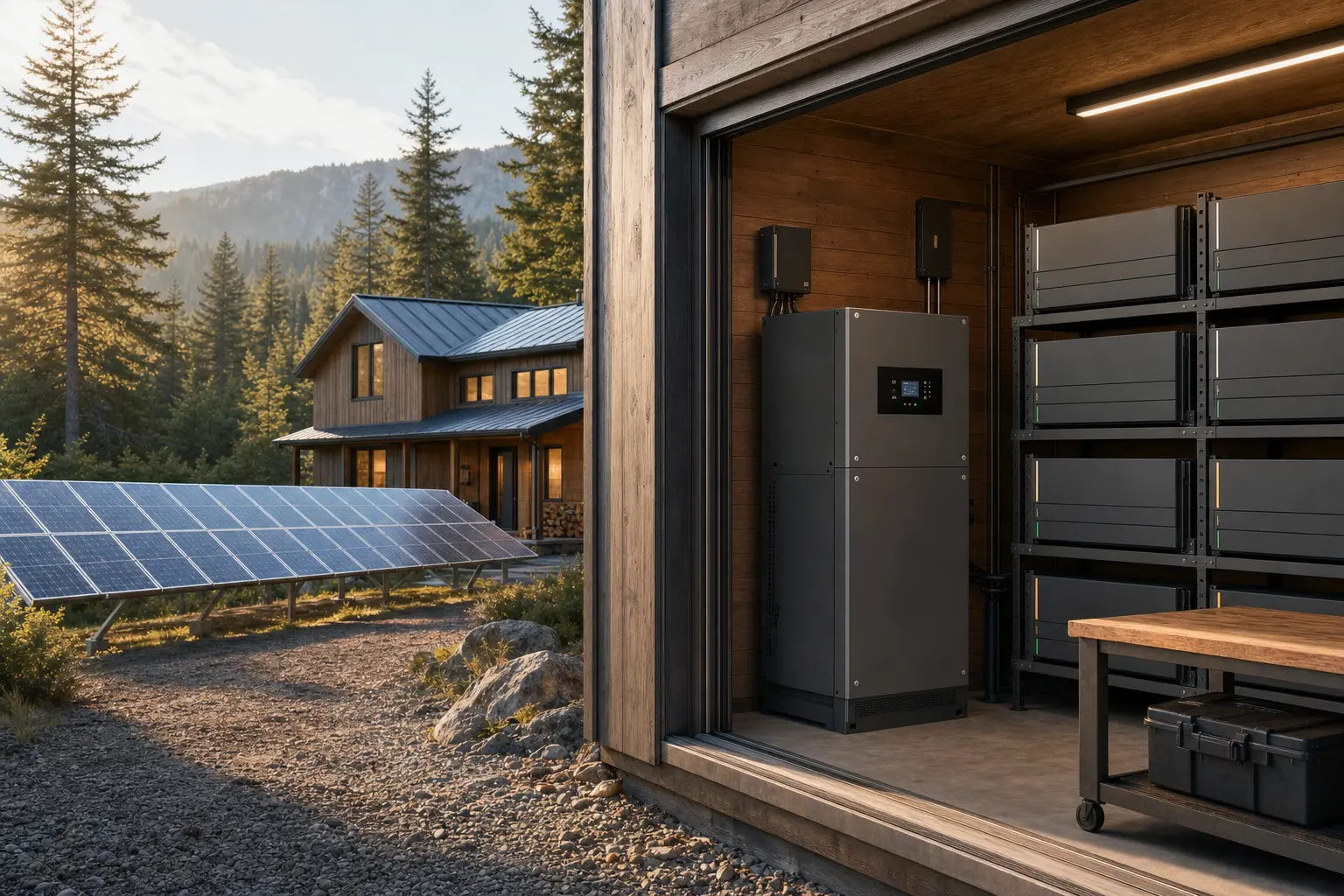
High-output off-grid equipment package
Equipment kit for off-grid and backup projects
Pair 12 kW of split-phase inverter capacity with 25.6 kWh of nominal storage and a 4.98 kW array for a carefully sized off-grid property.
Dated equipment scope only; installation, freight, site work, and other project costs may be separate.
Clear terms before you commit
The homeowner challenge
Remote homes, farms, and workshops can have several demanding 120/240 V loads but no dependable grid connection to absorb sizing mistakes or low-sun periods.
The proposed approach
The official SGR-12K20E kit addresses higher simultaneous-load needs with twelve 415 W modules, five 5.12 kWh LiFePO4 batteries, and a 12 kW 120/240 V split-phase inverter. The inverter can support demanding combinations of appliances only when the final design accounts for continuous power, motor starting, daily energy use, seasonal solar conditions, and reserve capacity.
Who it is for
Large remote homes, farms, cabins, workshops, and backup projects with a documented load plan.
Fit still depends on property conditions, measured loads, and provider availability.
Fit still depends on property conditions, measured loads, and provider availability.
Fit still depends on property conditions, measured loads, and provider availability.
Fit still depends on property conditions, measured loads, and provider availability.
Fit still depends on property conditions, measured loads, and provider availability.
Why consider it
How it works
These steps describe the intended homeowner experience. Actual flows and supported loads follow the commissioned design and operating settings.
Twelve solar panels provide approximately 4.98 kW of DC nameplate capacity. Real production varies with sun, season, temperature, shade, orientation, and system losses.
Five LiFePO4 batteries provide 25.6 kWh of nominal storage for evening use and low-production periods. A reserve and backup plan are still important off grid.
The 12 kW split-phase inverter supplies 120/240 V AC for the designed loads. Central air, well pumps, EV charging, and shop tools may be possible only after startup surge and energy-use analysis.
Off-grid success depends on matching daily use to seasonal solar production, monitoring battery state, and shedding or scheduling loads when needed.
Specifications
Nameplate values help compare equipment. They do not replace a production model, load calculation, or site-specific design.
Supporting system diagram
This original explanatory diagram remains intentionally simplified. Exact equipment quantities, connections, supported loads, and installation details follow the final property evaluation and written design.
Installation considerations
Requires site-specific load sizing, mounting, overcurrent protection, grounding, wiring, permitting where applicable, and qualified electrical work.
Complexity: High — multi-component off-grid design with separate controllers, battery cabinet, protection, mounting, and site-specific distribution.
Review the installation process →Build a circuit-by-circuit load inventory including motor startup demand.
Model winter or low-sun production rather than relying on a favorable-day estimate.
Confirm array structure, conductor runs, grounding, disconnects, overcurrent protection, and local permits.
Plan generator or other backup charging only with documented compatibility and qualified design.
Cost explanation
No price on this page is a checkout offer. A signed provider proposal must identify the exact equipment, labor, site work, taxes, and exclusions.
Equipment reference price
Dated equipment reference; freight, site work, and installation may be separate.
Estimated installed project range
No responsible numeric range is shown without a property and installation-scope review. Final pricing requires provider confirmation.
Incentives
No incentive is assumed. Equipment and project eligibility vary by location, program rules, installation date, and taxpayer circumstances.
Dated equipment reference only; no numeric installed range has been validated. A site-specific installed quote must account for freight and access, mounting or roof work, permitting, electrical distribution and upgrades, design, labor, commissioning, location, taxes, balance-of-system items, and system customization.
Final-cost factors
A useful quote separates the equipment reference from every installation and property-specific line item.
Local permit fees, inspections, and interconnection requirements vary by jurisdiction and utility.
Service panels, load centers, disconnects, protection, backup controls, and load management may change the scope.
Roof condition, structural work, array layout, ground mounting, trenching, and access can add labor and materials.
Engineering, licensed installation, testing, inspection corrections, and system setup belong in the complete project price.
Freight, taxes, travel, local labor rates, site access, and equipment availability differ by property and ZIP code.
Array size, battery quantity, backed-up loads, generator or EV integration, and optional equipment affect final cost.
What is in the reference scope
Monitoring: Confirm monitoring capabilities for the current component revision.
Expansion: Any expansion must remain within the exact inverter, battery, controller, and wiring design limits.
Availability: Provider and ZIP dependent; equipment-only fulfillment may differ from installed availability.
Package FAQ
Use these answers to understand the equipment scope, verified values, and package-specific tradeoffs before requesting a proposal.
It may, but the appliance running load, startup surge, duty cycle, other simultaneous loads, wiring, and inverter settings must all fit the engineered design.
No. Kilowatt-hours describe stored energy; kilowatts describe power delivered at one moment. Both battery limits and the 12 kW inverter rating matter.
No. It is an equipment reference. Freight, design, mounting, permitting, electrical distribution, labor, site work, commissioning, and taxes may be separate.
No. Production varies with location, season, weather, shade, temperature, orientation, cleanliness, and system losses.
Potentially, within the documented inverter, battery, controller, wiring, and code limits. Expansion should be designed rather than assumed.
Buyer objections, answered
The right answer depends on the property and the final design. These are the questions a provider should resolve before asking you to choose.
For this off-grid package, batteries are part of the intended design because they supply stored energy when solar production is low or unavailable. The appropriate capacity still depends on daily use, desired reserve, seasonal production, and any generator plan.
This reference package includes 4.98 kW DC. The appropriate size for your home depends on recent electricity use, roof or ground space, shade, orientation, local weather, utility rules, future loads, and the amount of energy you want the array to replenish.
Possibly, depending on system design—not from the headline kW or kWh values alone. Heating, cooling, pumps, electric cooking, EV charging, and other large loads must be checked for running power, startup surge, daily energy use, and simultaneous operation before whole-home or partial-home support is selected.
The batteries and inverter can continue supplying the loads included in the off-grid design while solar can recharge the bank when conditions allow. Runtime depends on battery state, active loads, reserve settings, weather, solar production, and any compatible generator strategy.
The timeline is site specific. Property assessment, engineering, equipment availability, permitting, utility review where applicable, roof or electrical work, installation, inspection, and commissioning can each affect the schedule. The provider should put its expected milestones and dependencies in writing.
Any expansion must remain within the exact inverter, battery, controller, and wiring design limits.
Shade reduces production and may change the appropriate array size or location. A site assessment should compare roof planes, seasonal shade, setbacks, responsible trimming where appropriate, and a ground-mount option before the final design is selected.
Manufacturer coverage
Warranty terms vary by component; the complete kit does not have one universal warranty duration.
Installation coverage
Workmanship coverage, when offered, will be stated in the signed installer proposal.
Fulfillment
Seller freight terms, access limits, inspection requirements, and surcharges control.
Provider and ZIP dependent; equipment-only fulfillment may differ from installed availability.
More planning questions
Use these general answers alongside the product-specific details above.
Solar cost depends on the home, energy use, equipment, installation complexity, and location. A property evaluation and written proposal are needed before final pricing is available.
Fit depends on roof orientation, shade, electrical setup, local conditions, and available mounting space. A qualified property review confirms whether a roof, ground-mount, or another configuration is practical.
Not every solar project needs batteries. The decision depends on grid reliability, backup needs, energy goals, compatible equipment, and budget. A battery may add outage capability, but supported loads and duration require a specific design.
Yes. You can complete an assessment and compare available systems before making a purchase commitment. The assessment is free, and no purchase is required.
Timing varies with site review, design, permitting, equipment availability, inspections, and utility requirements. A provider should give a project-specific schedule and explain which milestones can affect it.
Planning guides
Independent planning context
Start with energy and power needs, then test the design against site conditions.
Read guide →Independent planning context
Understand the operating assumptions behind three very different system architectures.
Read guide →Independent planning context
Use power and energy correctly when comparing panels, inverters, loads, and batteries.
Read guide →Related starting points
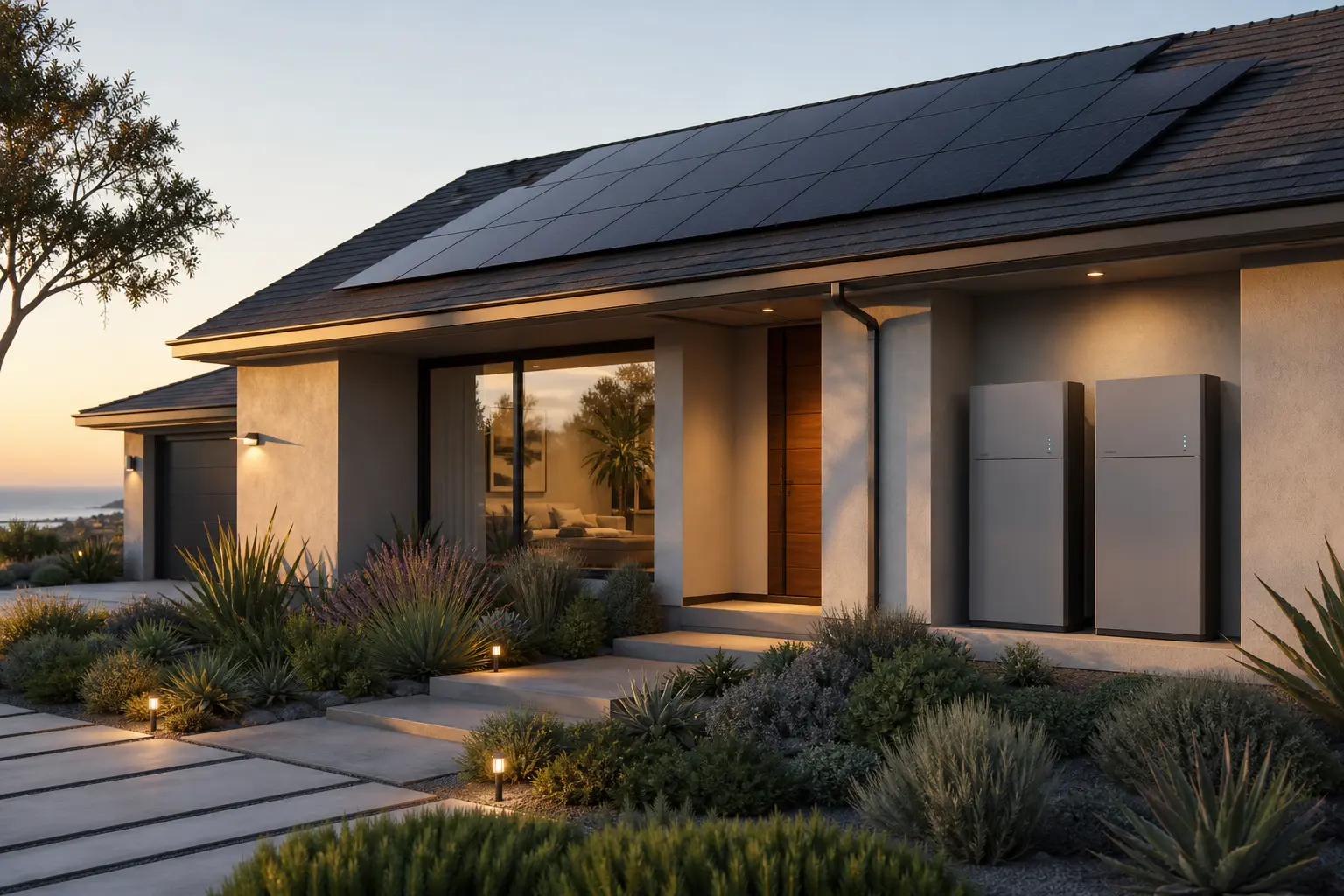 Example configuration
Premium California configuration
Homes on time-of-use rates can produce solar before evening demand peaks, while an outage plan can fall short when storage and backed-up loads are chosen separately.
$44,500–$52,000 installed estimate
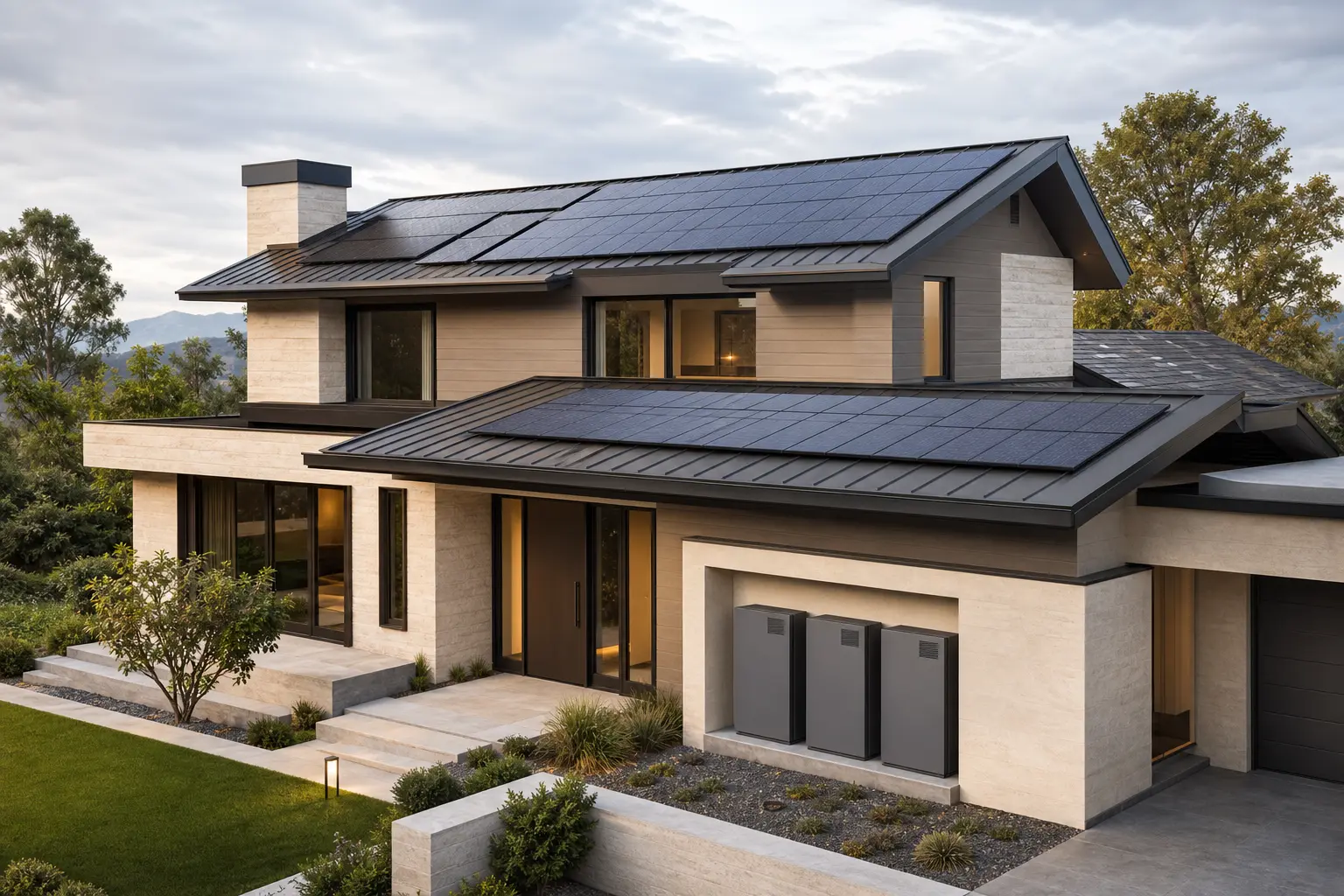 Example configuration
Solar System Installations Enphase-based configuration
Complex roof planes, localized shade, and changing backup goals can make a fixed, centrally converted solar-and-storage design harder to fit and expand.
$39,000–$46,500 installed estimate
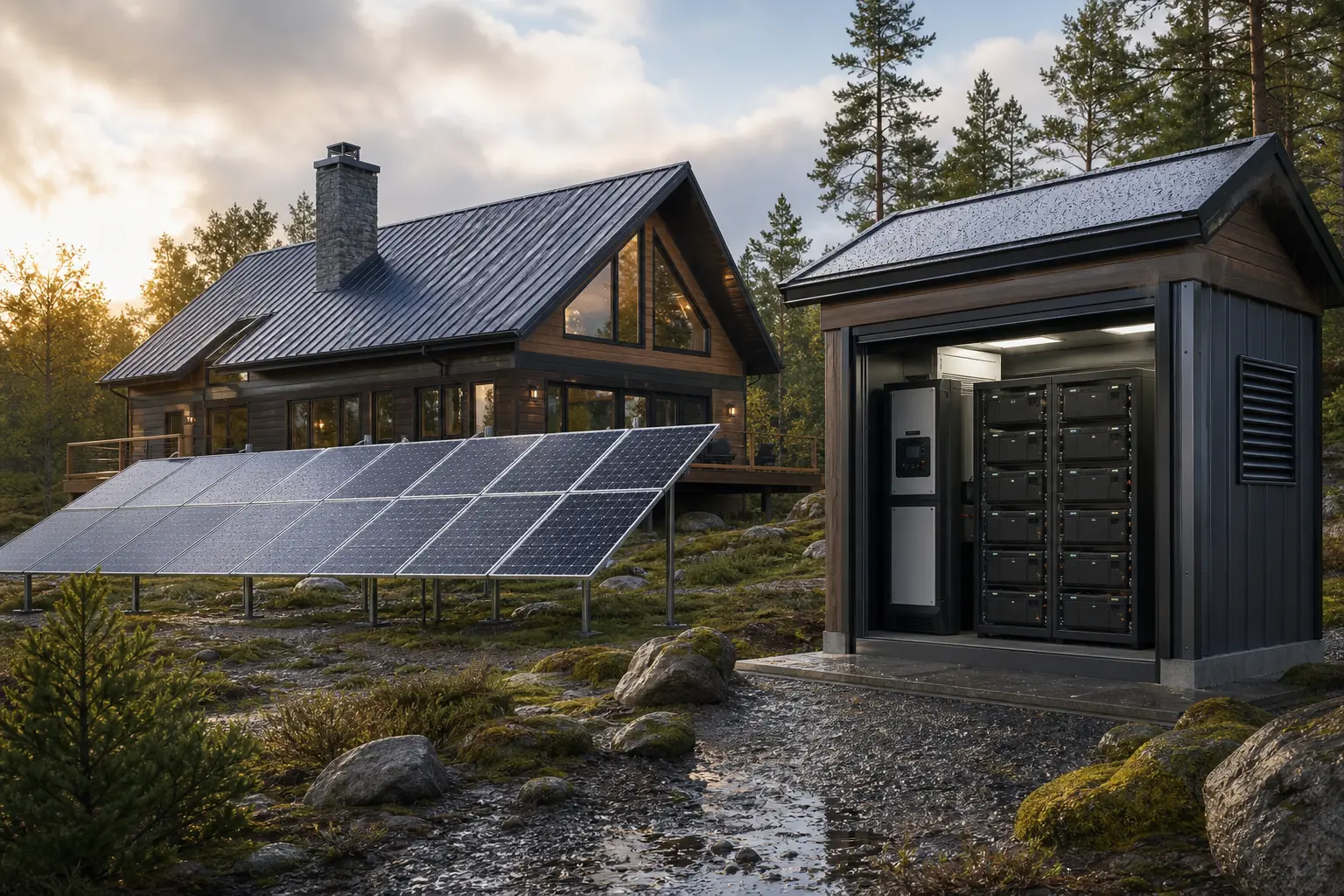 Example configuration
High-capacity battery configuration
Remote properties with high daily use or longer outage plans can outgrow smaller arrays and battery banks, but capacity alone does not establish whole-property independence.
$12,049.99 equipment reference
What happens next
Requesting a match starts the review; it does not commit you to equipment, financing, or installation.
Tell us about the property, recent electricity use, backup goals, timing, and any large planned loads.
Use the match to compare suitable package types, likely tradeoffs, and the information still needed for design.
A qualified provider must verify the site, equipment, engineering, availability, schedule, and written installed price.
Personalized next step
Share your property, energy range, backup goals, and timeline. You will get a more useful starting point without committing to a purchase.
Third-party trademarks belong to their respective owners. Display does not imply affiliation, authorization, or endorsement.