
Load-led system planning
Account for daily energy, motor starts, pumps, heating, cooling, and future equipment.
For remote homes, cabins, and working properties
Start with real loads, seasonal solar conditions, storage needs, and backup plans before comparing off-grid equipment packages.
Clear terms before you commit
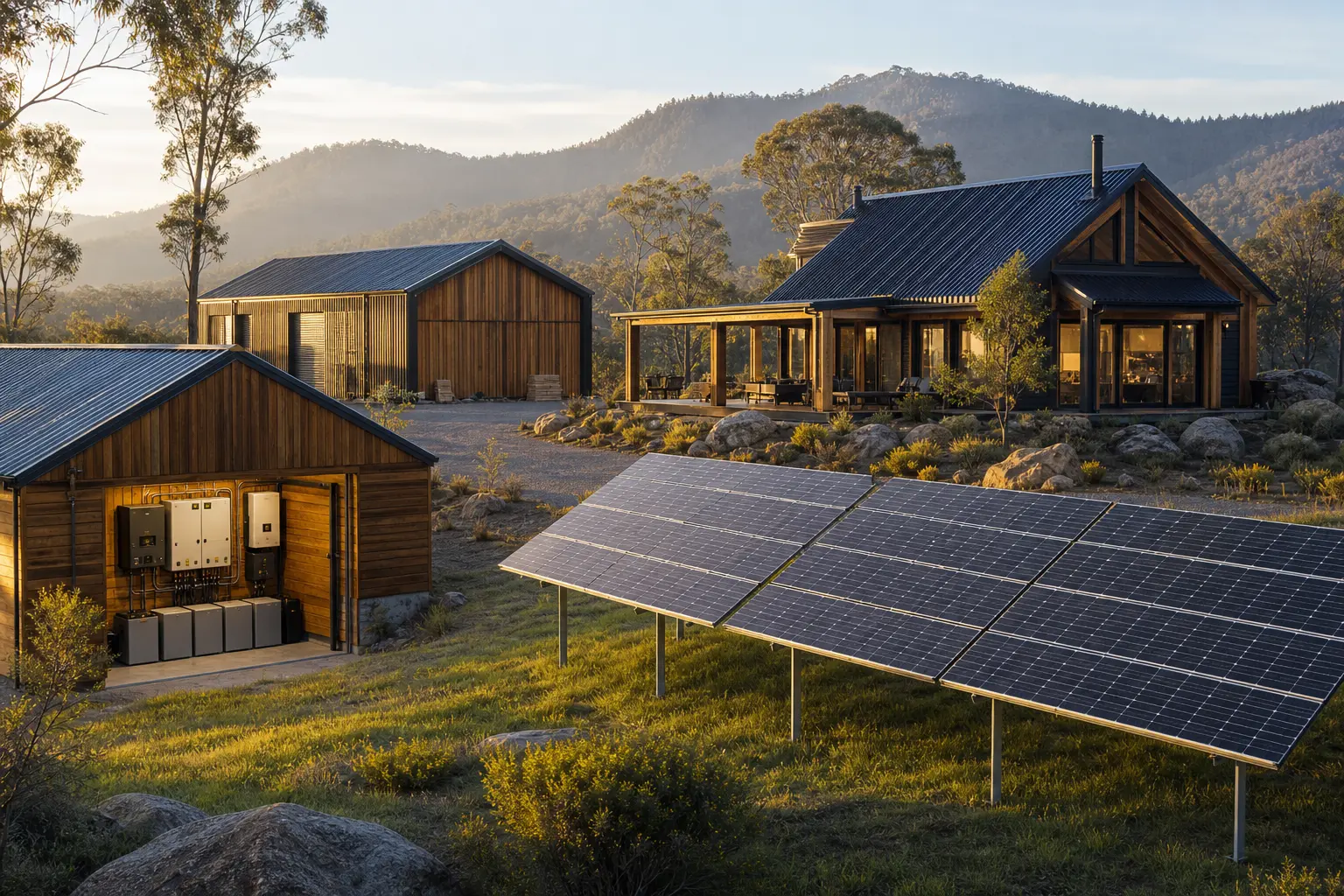 Example configuration
Account for daily energy, motor starts, pumps, heating, cooling, and future equipment.
Model battery capacity around nighttime use, low-sun periods, and desired autonomy.
Treat generator integration and load management as design decisions, not afterthoughts.
Questions to resolve before choosing
A package nameplate does not confirm year-round performance. Seasonal production, surge loads, reserve settings, generator strategy, and household habits all influence the design.
Cabins · farms · remote homes
Year-round homes, seasonal cabins, workshops, pumps, and agricultural loads each need a different operating plan.
Estimate daily energy and identify high-starting-power equipment, including pumps, compressors, and motors.
Array sizing should reflect site conditions and lower-production periods—not only a bright summer day.
Storage bridges nighttime and low-sun periods. Desired autonomy, depth of discharge, and reserve policy matter.
Plan load shedding, generator integration, and recovery before equipment is selected.
Property examples
These are planning scenarios, not equipment recommendations. Each needs load and site validation.
Intermittent occupancy and modest loads may support a simpler operating plan, depending on winterization and appliance choices.
Year-round living requires seasonal production modeling, disciplined load planning, and a defined backup strategy.
Motors and tools can create surge and simultaneous-power requirements beyond their daily energy use.
Future buildings, appliances, or EV charging should be considered in inverter, battery, array, and site planning.
A measured process
The short request starts a conversation. Final design, price, availability, and installation scope require property and provider review.
Share the type of project and a valid five-digit ZIP.
Tell us how the sales team can follow up with you.
Our team reviews the location, project interest, and any product you selected.
Any available provider must confirm design, pricing, eligibility, and terms in writing.
System examples
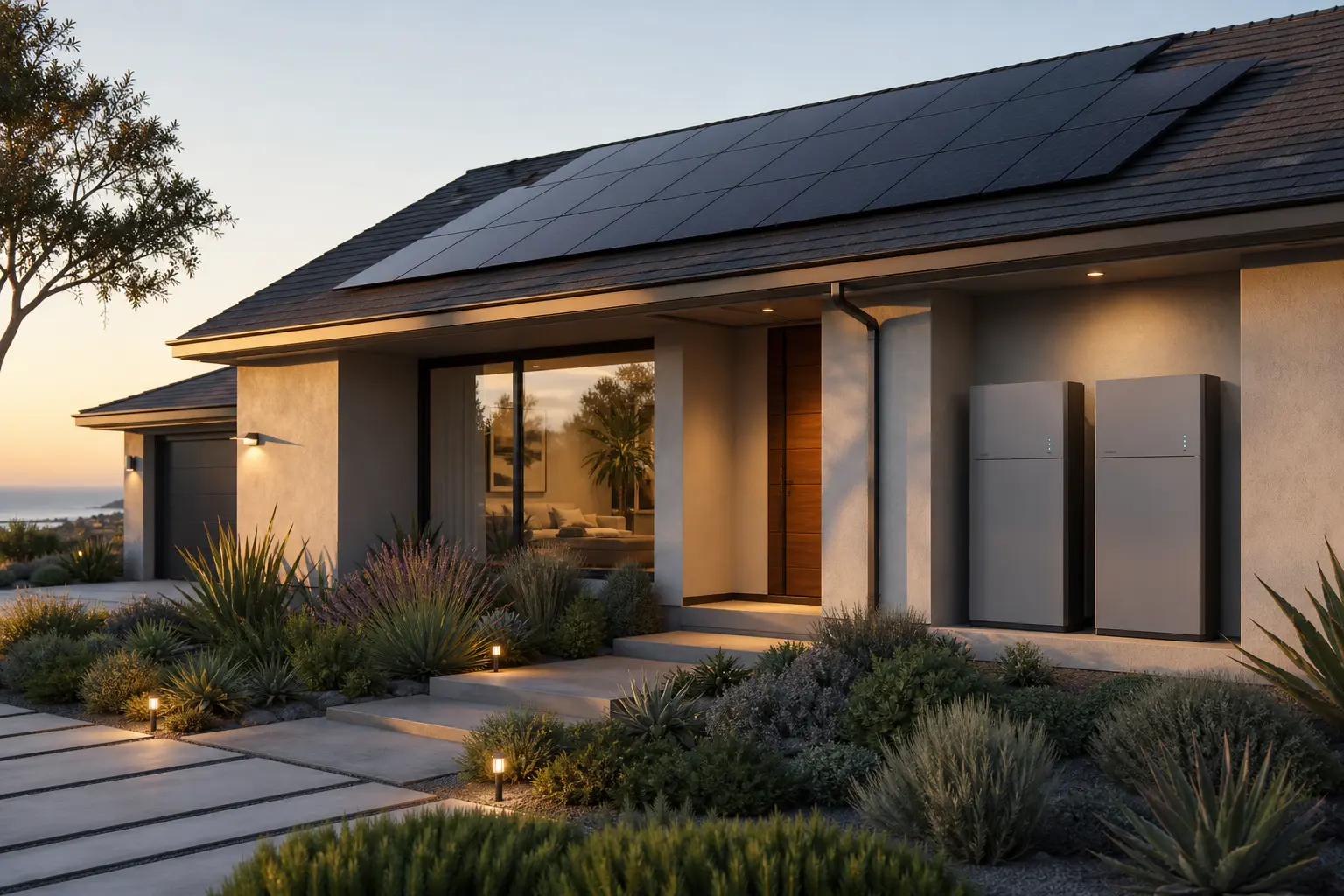 Example configuration
Premium California configuration
Homes on time-of-use rates can produce solar before evening demand peaks, while an outage plan can fall short when storage and backed-up loads are chosen separately.
$44,500–$52,000 installed estimate
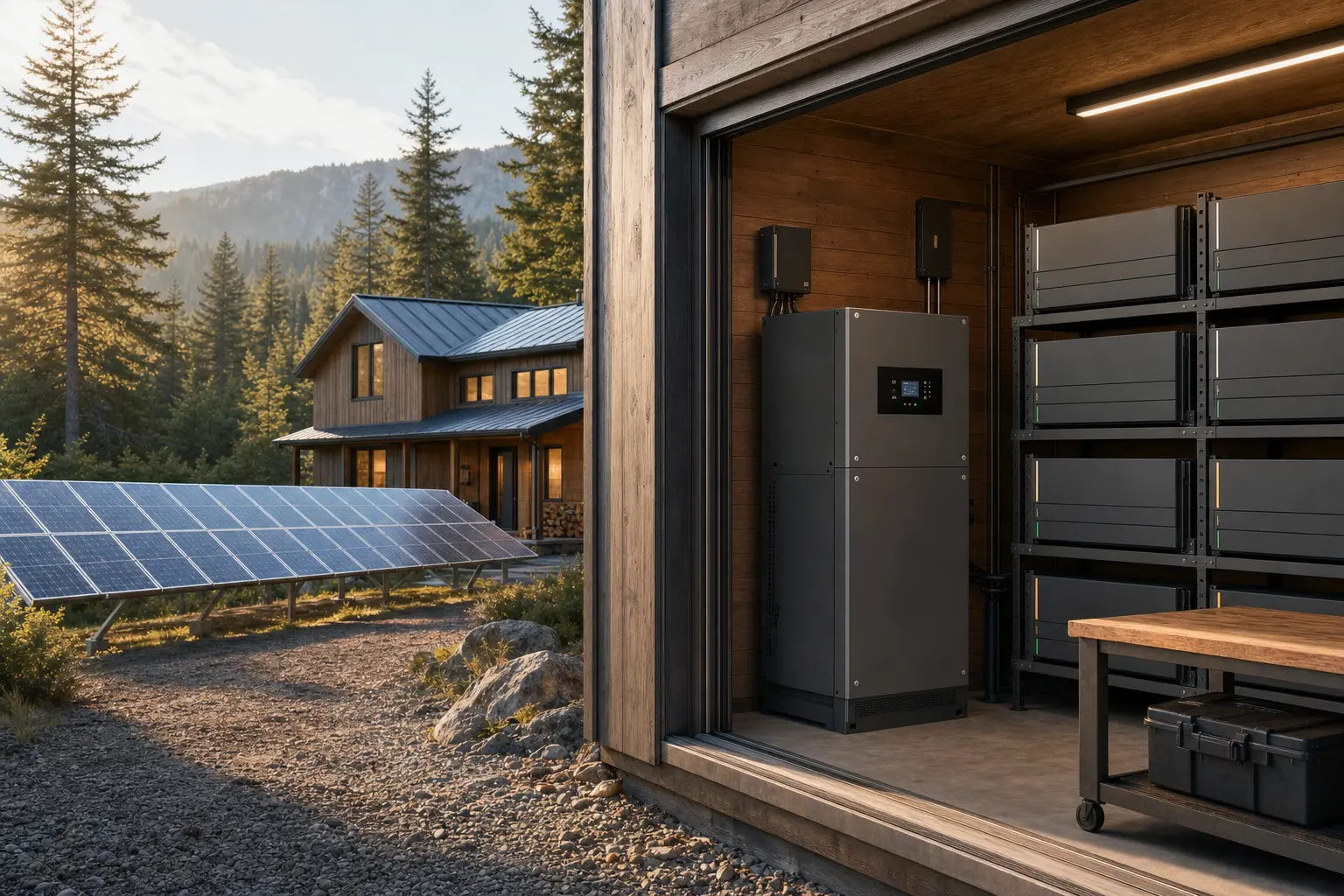 Example configuration
High-output off-grid equipment package
Remote homes, farms, and workshops can have several demanding 120/240 V loads but no dependable grid connection to absorb sizing mistakes or low-sun periods.
$11,946 equipment reference
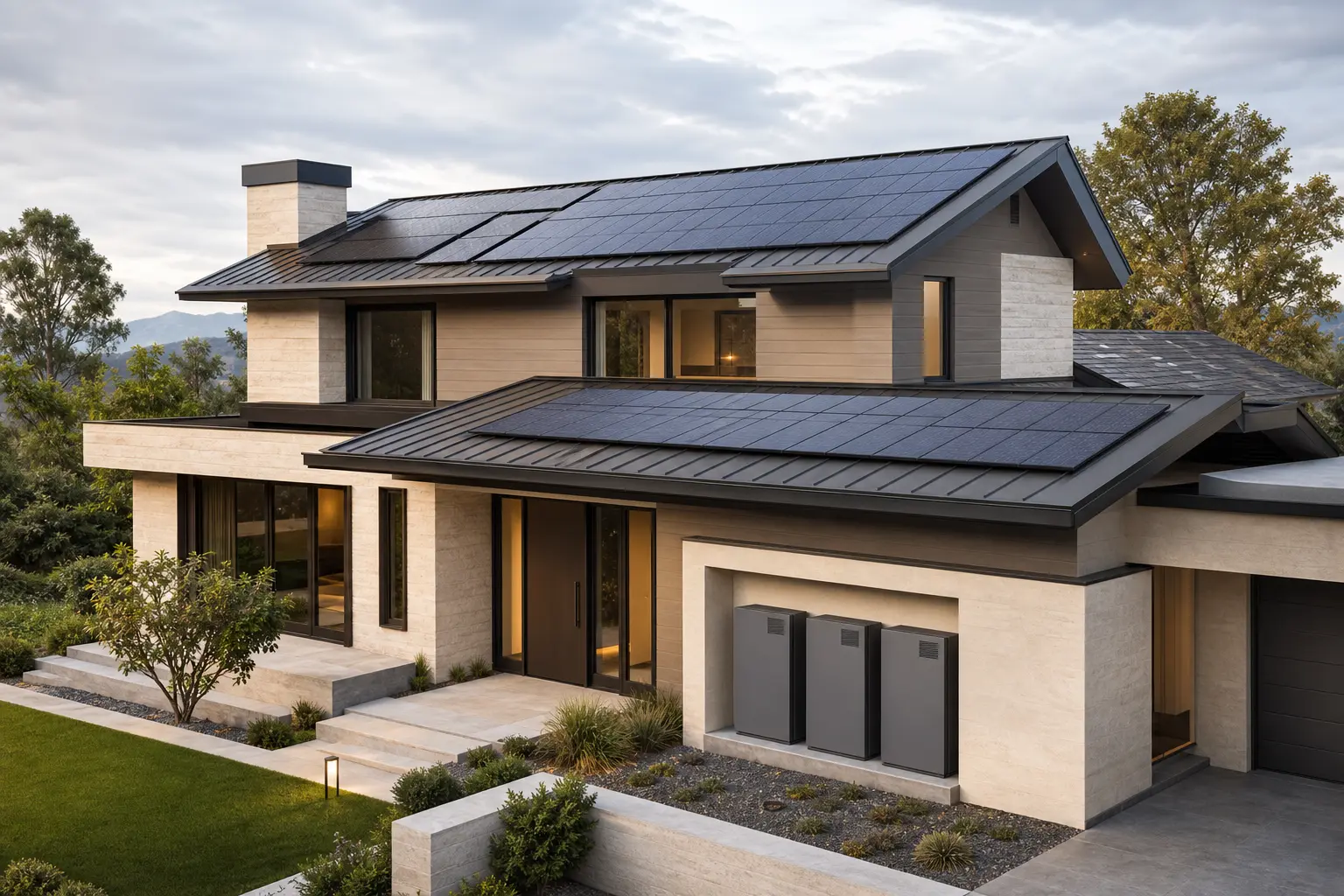 Example configuration
Solar System Installations Enphase-based configuration
Complex roof planes, localized shade, and changing backup goals can make a fixed, centrally converted solar-and-storage design harder to fit and expand.
$39,000–$46,500 installed estimate
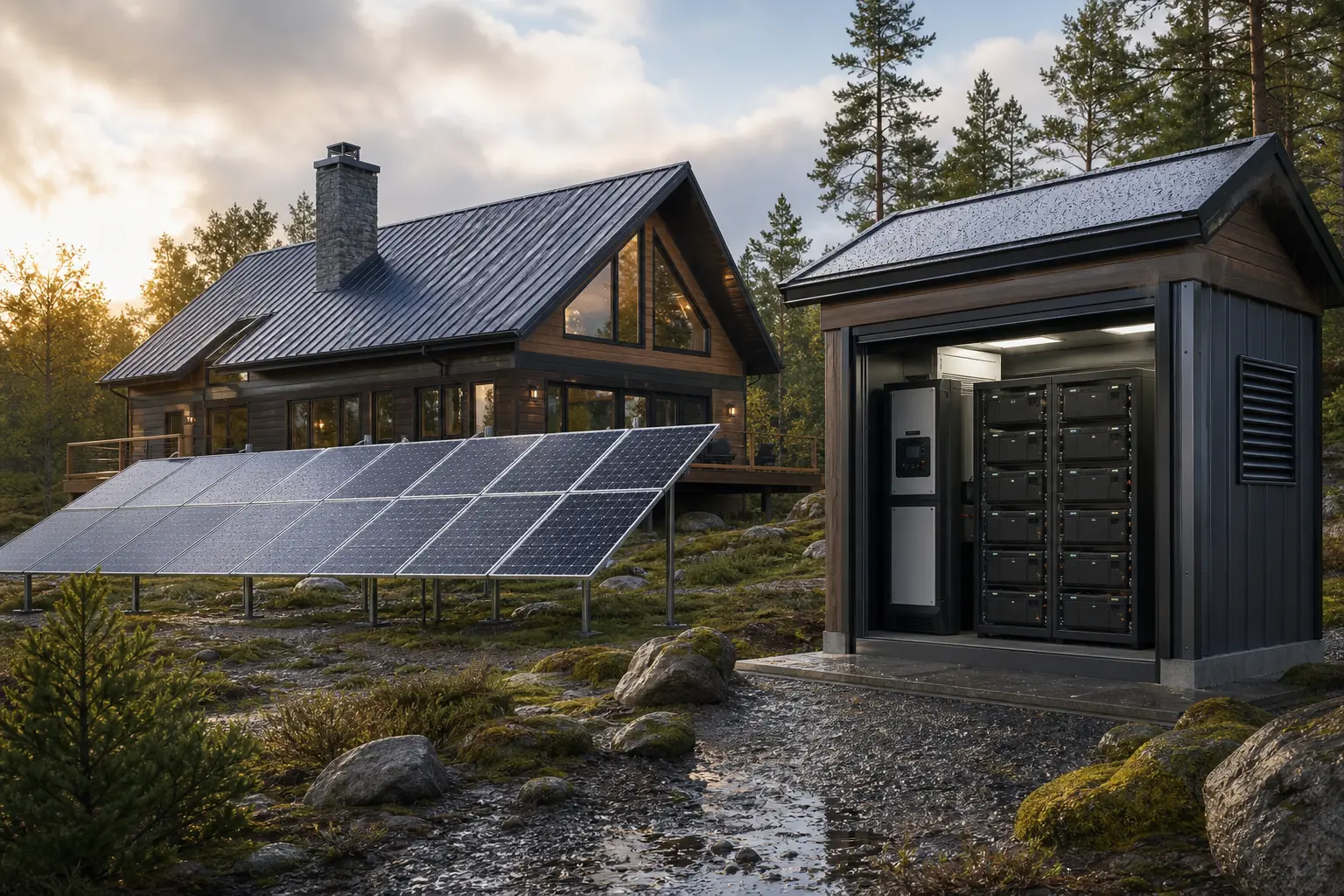 Example configuration
High-capacity battery configuration
Remote properties with high daily use or longer outage plans can outgrow smaller arrays and battery banks, but capacity alone does not establish whole-property independence.
$12,049.99 equipment reference
Coverage has layers
Equipment components and installation workmanship can have separate issuers, periods, exclusions, and remedies. Request the applicable documents before signing.
Read the warranty guideOff-grid planning questions
These answers are general guidance. Site-specific provider terms control.
Sizing starts with a detailed load inventory and the site’s lowest-production season, then accounts for system losses, battery charging, reserve targets, mounting conditions, and backup strategy. Annual averages alone are not enough.
Battery capacity depends on nighttime use, desired autonomy, allowable depth of discharge, temperature, conversion losses, high-power loads, and the plan for low-sun periods. A provider should model these factors together.
It can be designed around a defined set of loads, but not every package supports every appliance or usage pattern. Heating, cooling, pumps, welders, and EV charging can materially change inverter, storage, and array requirements.
A generator is commonly considered for extended low-sun periods, unusual demand, maintenance, or recovery from a deeply discharged system. Whether one is needed depends on climate, loads, autonomy goals, and tolerance for load management.
Expansion may be possible when the original inverter, batteries, controls, wiring, mounting space, and permits allow it. Planning the expansion path up front can avoid incompatible equipment or undersized infrastructure.
Take the next useful step
Start with real loads, seasonal solar conditions, storage needs, and backup plans before comparing off-grid equipment packages.
Start My Off-Grid Assessment